Your face is one of the most essential components of your body image. It is an important part of your personality, and the first thing people see when they meet you. Consequently, a face injury resulting in a scar may greatly influence your perception of yourself and negatively affect self-esteem.
The face is one of the most exposed parts of your body, so you may find it hard to protect it at all times after an injury, thereby increasing the risk of scar formation. Read on to discover how you can care for your facial skin to ultimately prevent and reduce the appearance of scars.
- Facial scars are not generally different from other scars
- They are more visible than other scars
- Look after them as you would most scars
In this article, we’ll ask:
- What makes your face special?
- Are facial scars different from other scars?
- How can you keep your face healthy?
- What can you do to reduce the appearance of scars?
What makes your face special?
Your face is special because it communicates your emotions and other things you might be thinking of. In terms of skin features, your face is also different from the rest of your body. Your facial skin is one of the most, if not the most, exposed parts of your body.
Despite the fact it is exposed to harmful elements, such as sunlight, pollution and humidity, your facial skin is thinner and composed of smaller cells than the skin on the rest of your body [1]. In addition, it contains more oil glands and hair follicles than your average skin area [2,3].
For these reasons, you should always take care of your face and pay special attention to it – whether under normal circumstances or after an injury.
- Clinically shown to visibly reduce the appearance of scars
- Unique triple-benefit formula designed to penetrate beneath the skin surface
- Use just once a day
How to Reduce Appearance of Acne Scars
Are facial scars different from other scars?
Simply put, no – facial scars are not generally different from other scars. Facial scars are like any other type of scar and occur in the exact same way as those on other parts of your body. There are three main types of scars: hypertrophic, keloid and atrophic.
The first two are created by excessive collagen production and are usually caused by surgery or burns. The latter type is the result of a lack of collagen production and is typical of acne scars (but not exclusive to them).
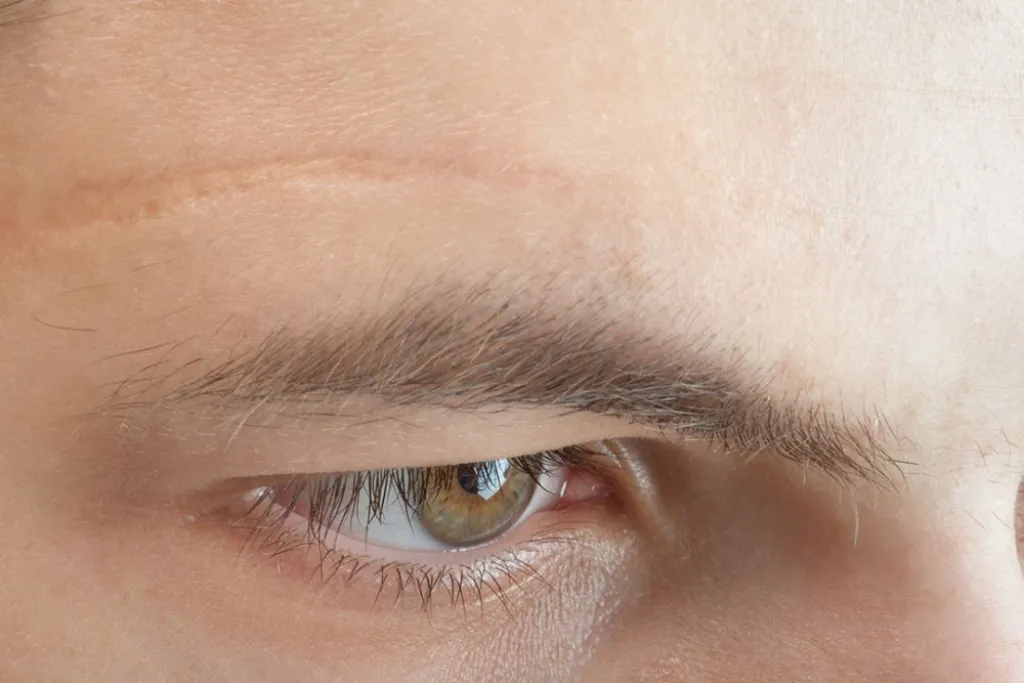
However, facial scars are different from other scars because they tend to be more visible. There are various reasons for this.
Firstly, your face is usually the last thing you cover and protect from the environment – making it more sensitive. Additionally, scar tissue, and more specifically keloid or hypertrophic tissue, lacks hair follicles [6], sometimes resulting in a very stark contrast compared to the hairier skin next to it.
If you have a darker or fairer skin tone, you are also more likely to develop noticeable scars, since they tend to get hypo- or hyper-pigmented [7].
Since they are hard to conceal, facial scars may become permanent reminders of past traumas or injuries, which could lead to damaging psychological effects [8]. It’s therefore important to take care of your skin and deal with any scars early.
How can you keep your face healthy?
The following tips can help to keep your facial skin healthy:

Healthy skin is one of the main ways to reduce the chances of post-injury/surgery scar formation. Once an injury has occurred, on your face or any other part of your body, act fast and care for the wound. Some face injuries may require you to wear a dressing. This might feel unpleasant or uncomfortable but will be effective in protecting the healing skin, therefore limiting scar formation.
What can you do to reduce the appearance of scars?
Keeping your skin well hydrated and protected after wound healing, with the right type and amount of skin protectant, can help reduce the appearance of scars. That’s because scars tend to develop when the skin is not hydrated enough. Choose protection which includes a moisturising agent – and apply it regularly once the wound has healed.
During application, don’t hesitate to thoroughly massage your scar, as this might help it fade. But don’t try it until two weeks after complete healing [9].
With over 20 years of expertise in scar science, Mederma® scar care products provide a triple benefit formula [10]. Our products include Mederma® Advanced Scar Gel, and Mederma® PM Intensive Overnight Scar Cream.
Summary
Your face is fundamental to your appearance, so it’s perfectly understandable if you’re worried about scars. But keeping your skin healthy and hydrated can reduce the risks of scars forming in the first place. A range of skincare products are also available to soften the scar if an injury strikes. Always remember that hard work and persistence can go a long way in making facial blemishes less obvious.
References
- Voegeli R, Gierschendorf J, Summers B, Rawlings AV. Facial skin mapping: from single point bio-instrumental evaluation to continuous visualization of skin hydration, barrier function, skin surface pH, and sebum in different ethnic skin types. Int J Cosmet Sci. 2019/08/30 ed. 2019;41: 411–424. doi:10.1111/ics.12562
- Szabo G. The regional anatomy of the human integument with special reference to the distribution of hair follicles, sweat glands and melanocytes. Philosophical Transactions of the Royal Society of London Series B, Biological Sciences. 1967;252: 447–485. doi:10.1098/rstb.1967.0029
- Pagnoni A, Kligman AM, Gammal SE, Stoudemayer T. Determination of density of follicles on various regions of the face by cyanoacrylate biopsy: correlation with sebum output. British Journal of Dermatology. 1994;131: 862–865. doi:10.1111/j.1365-2133.1994.tb08590.x
- Pontius AT, Smith PW. An Antiaging and Regenerative Medicine Approach to Optimal Skin Health. Facial Plast Surg. 2011;27: 029–034. doi:10.1055/s-0030-1270416
- Mayo Clinic. Skin care: 5 tips for healthy skin. 2020. Available: https://www.mayoclinic.org/healthy-lifestyle/adult-health/in-depth/skin…(opens in a new tab)
- Healthline. Hair Transplants on Scars: What to Know. 2020 Available: https://www.healthline.com/health/hair-transplant-on-scar
- Chadwick S, Heath R, Shah M. Abnormal pigmentation within cutaneous scars: A complication of wound healing. Indian J Plast Surg. 2012;45: 403–411. doi:10.4103/0970-0358.101328
- Gibson JohnAG, Ackling E, Bisson JI, Dobbs TD, Whitaker IS. The association of affective disorders and facial scarring: Systematic review and meta-analysis. Journal of Affective Disorders. 2018;239: 1–10. doi:10.1016/j.jad.2018.06.013
- Peer Well. Scar Tissue Massage: When & How to Massage Scar Tissue After Surgery. 2020. Available: https://www.peerwell.co/blog/2018/06/27/scar-tissue-massage-after-surge…
- Draelos ZD, Baumann L, Fleischer AB Jr, Plaum S, Avakian EV, Hardas B. A new proprietary onion extract gel improves the appearance of new scars: a randomized, controlled, blinded-investigator study. J Clin Aesthet Dermatol. 2012;5: 18–24.